The Stages of Tooth Development
Do you remember one of the first times you ever lost your baby teeth? Maybe it fell out while you were wiggling it or maybe the tooth fairy left you a little surprise the next day. Within our lifetime we go through two sets of teeth, our milk teeth or baby teeth and our permanent adult teeth. The stages for tooth development are the same for each set. Did you know that our baby teeth start forming while we’re inside the womb? In fact, teeth start forming at around the 5–6-week mark! There are five stages your teeth go through in the development process:
Bud Stage
The bud stage is the first stage in teeth development. During this time, dental epithelium bud cells start to form a layer called the dental lamina. This takes place in your upper and lower jaws, this layer will build the foundation of the tooth germ. It provides the soft tissue necessary for tooth formation. This stage is called the “bud” stage because it resembles the leaf buds on plants.
Cap Stage
Cells begin to shape the outer layer of the tooth during the cap stage. This is called the cap stage as it forms the cap that rests above the tooth bud. This layer will eventually form the enamel that protects the tooth. The tooth bud below will form the two interior layers of the tooth called the dentin and the pulp. The dentin helps provide the primary structure for the enamel while the pulp provides nutrients to the tooth. During this stage, the dental follicle (a sac of cells that contain blood vessels and nerves) surrounds the enamel and dental papilla. We now have three essential elements of the tooth germ: the enamel, the papilla and the dental follicle.
Bell Stage
As the cap begins to grow larger it forms a bell shape. During this stage, cells of the enamel organ change functions. They divide into four groups, inner enamel epithelium, outer enamel epithelium, stratum intermedium and stellate reticulum. These cells work together to develop the enamel layer of the tooth. This marks the end of the early bell stage, during the late bell stage (or the crown stage) the enamel epithelium folds and starts to create the crown, each tooth has its own unique shape depending on the type of tooth (molars, canines and incisors).
Crown Stage and Root Formation
During the crown stage, the outer two layers of your teeth start to form. Ameloblast and odontoblast cells help with the formation of enamel and dentin. The tooth also begins to harden and mineralize. Your tooth’s root forms at this stage, it comprises of three structures, the dental papilla, the dental follicle and cells known as Hertwig’s epithelial root sheath.
Eruption Stage
The final stage is the eruption stage, once the tooth is formed it begins to move vertically, above the gum line. Depending on the type of tooth, eruption for infants begin at different times. Typically, your baby teeth erupt at 6 months old and your wisdom teeth only erupt when you are five years old. Your child’s mouth changes dramatically from the time their teeth start erupting to when their permanent adult teeth come in. During this process, your Calgary dentist can monitor your child’s growth and development, and identify and treat any problems that may arise. Regular visits to your dentist throughout childhood will help your child’s teeth grow strong and healthy with minimal problems.
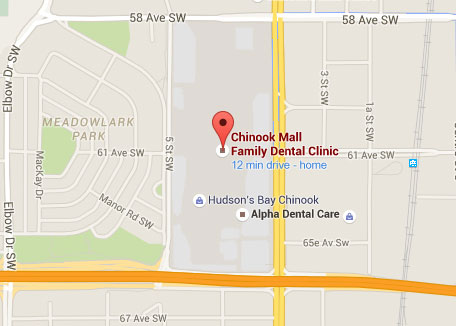
At Chinook Mall Family Dental, we are with you every step of the way. From the development of your little’s one’s baby teeth to the formation of your adult teeth. We also offer wisdom teeth removal, dental bridges and much more! The key to ensuring your teeth are healthy at every stage is to schedule regular dental appointments. Our Calgary dentists recommend two dental checkups a year or one every six months. To make an appointment, call us at 403.252.7711 or book online, we can’t wait to see you!