Root Canal Therapy
Almost everyone has heard a horror story about root canal surgery. It doesn’t sound pleasant, but it is a very beneficial surgery in many cases, alleviating discomfort and preventing further infection.
 When do you need a root canal therapy?
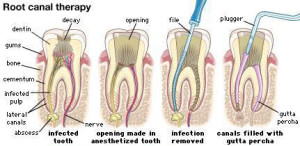
A root canal procedure is usually recommended when a tooth decays or damage to a tooth results in infection of the inner part of the tooth, the ‘pulp’. The pulp is full of blood vessels and nerves, which get exposed when tooth wear, damage or decay occurs and cause serious pain. In early stages of infection, one may not feel pain, but there may be visible changes in the tooth (discolouration and darkening) or increased sensitivity to temperature and pressure. When these issues become severe, a root canal is usually the best treatment.
Why is it important?
If you have exposed or infected tissue in your tooth, this can form an abscess. The symptoms of an abscess can vary from the temperature and pressure sensitivity to severe pain and swelling. The infection could also spread and cause more general problems.
What is a root canal?
A root canal involves cleaning out all of the infected pulp, blood vessels and nerves, from the tooth and sealing it. This allows the dentist to save your tooth rather than pulling it out, while preventing worsening of the infection and resulting into other problems. If the infection is severe or the tooth doesn’t have good bone support, it may have to be removed as a whole, but more commonly a root canal will address the issue while still leaving your tooth intact.
 What exactly happens during the procedure?
The most important part of the process is the removal of infected tissue. After this, the tooth is carefully shaped, cleaned and sealed, to ensure the problem will not recur. An antibacterial solution is also used to ensure that the tooth is free from infection before it is sealed.
Root canal is a time consuming process, which sometimes takes up to two hours. If the tooth that needs work is a molar, it may take even longer, because molars have more roots into your jaw, and will take more time to clean and shape.
Will it hurt?
The procedure is normally performed under local anaesthetic, which numbs the nerve that sends pain signals from that particular tooth. Sometimes when there is an infection, it may take more local anaesthetic to numb the area.
After the procedure is completed, treated area of your mouth may remain tender for a few days, but other problems should resolve quickly. If there is lingering pain after a week, you must contact your dentist.