Dental Implants
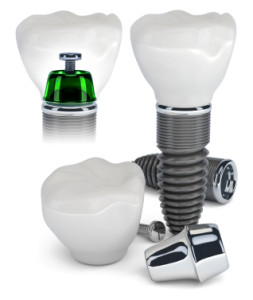 Dental implants are man-made tooth foundations implemented to assist in the restoration of a missing tooth or teeth. This process helps stop or at least reduce the jawbone’s deterioration. Dental implant operations are classified under prosthetic dentistry. Interestingly, they are also categorized under cosmetic dentistry.
Dental implants give people the durability needed to chew their favorite foods pain-free. Implants also galvanize and bear the jawbone while helping to prevent bone loss.
Causes of Tooth Loss
Tooth loss can occur because of:
- Decaying teeth
- Gum disease
- Mouth trauma
- Excessive degeneration
- Root canal failure
- Hereditary defects
A dentist must be consulted to determine whether or not dental implants are right for a patient. During the consultation, the dental professional will examine the patient’s teeth, gums, bone density and tooth quantity. This process may require X-rays and tomography scans to make sure there is an adequate bone structure for inserting the dental implants and to figure out the exact location where they will be placed.
Depending on the condition of the patient, the dentist will inform them on the treatment’s duration, the number of appointments needed and what each procedure entail. Sedation and local anesthesia choices will also be discussed during the consultation.
Dental Implant Placement Procedure
Here are the two steps that occur during the placement procedure:
1. Jaw Preparation
Dental implant restorations are typically made of a titanium crown and screw. A pilot hole is drilled in the toothless regions of the jaw. This guides the screw so it can hold the implant securely. The dentist must be precise when drilling the pilot hole. If they are not, they could cause damage to the jaw and facial structures. Dentists often utilize surgical guides based on CT scans when they place implants.
2. Implant Placement
Once the pilot hole is bored into the correct location on the jaw, it is gradually widened for the placement of the screw. When the screw is in place, surrounding gum tissue is tightened around the implant. A protective cover screw is set on the top to enable healing in the gum region. After healing for roughly six months, the dentist will remove the covering from the implant and fasten an abutment to hold the crown to the implant.
The abutment can sometimes be fastened during the initial procedure. Once the abutment is placed, the dentist will fashion a temporary crown. This serves as a model for the gums to grow around. The procedure is finished once a permanent crown replaces the temporary crown.
Implant Recovery
Dental implant recovery is subject to several variables, including the different procedures necessary to complete the patient’s treatment. Good oral hygiene is required to guarantee the correct fusion of the implant with the bone structure. Dental implant restorations can stay in place for over forty years if they are cared for properly.
Discomfort should be minimal after the initial procedure. Swelling of the gums and face are known to occur, as is limited bleeding and bruising of the area surrounding the implant. Dentists often prescribe pain medications to relieve some of the post-procedure discomfort.
It takes up to six months to heal from the operation. Seating crowns and fitting can take as long as two months. This timeframe is general, however; the recovery period depends on the individual patient.
Follow Up Care and Post-Procedure
 The patient’s diet should be limited to soft foods five to seven days after the procedure. Although it is unlikely, stitches may need to be removed by the dentist. Self-dissolving stitches are commonly used and do not require removal.
The patient, if inserted with the dental implant, must clean temporary restorations as they would clean their other teeth. Regular cleaning assists in enabling the greatest potential for the healing implant.
Not flossing or brushing is the main cause of dental implant failure. Infections are likely to arise if the implant and the areas surrounding it are not cleaned regularly. Smoking also contributes to the high rates of dental implant failure and it should be strictly avoided during the healing period.